Saturday, August 31, 2024

A Philosophy for Modern Life

 I read a book like this and I want to go back to school. The ideas, the people, the history!


We often think of existentialism as something a moody, rebellious teenager goes through, but Bakewell recasts this philosophy for us in her deeply illuminating book. Her cast of characters is huge - from the phenomenologists Husserl and Heidegger in Germany to the superstars of existentialism -Jean-Paul Sartre, Simone de Beauvoir and Albert Camus along with other lesser known but no less important philosophers - Karl Jaspers, Levinas, Merleau-Ponty, Simone Weil, to name a few. Not to mention the famous people these philosophers influenced deeply - Iris Murdoch, Vaclav Havel, James Baldwin.

Bakewell explains the core of what seems to be a complicated philosophy quite simply. Freedom, Sartre says, is at the heart of the human experience. As a human being, I create my nature as I go along. I may be influenced by biology, personal and cultural backgrounds, but none of this completes me or defines my essence - I make my essence up as I go along. "Existence precedes essence." It is a philosophy that debunks anything that impinges on that quest for personal freedom - be it organized religion or the state or racism or patriarchy. Simone de Beauvoir's The Second Sex for example, is a book about how the world imprints itself on a woman through her life, holding her back from her true self. The world makes her a woman - feminine, modest, decorous, restrained at home, forever in thrall of the man's gaze. Written in the forties, it was revolutionary - it made women re-think the lives they led.

In a post-war world, this philosophy asked people to go ahead and make the world they wanted - and it made these philosophers stars. The most interesting parts of the book are when Bakewell combines the biographical and the historical, showing us how each of these philosophers navigated the political circumstances around them - fascism and communism, the Cold War and the anti-colonial movements. And how these circumstances and their personal reactions to them created deep divisions and rifts among these friends and colleagues.

The ideas these existentialists and phenomenologists wrote about were intrinsic to how we see the twentieth century today. The fight against racism, the feminist movement, the anti-colonial movement - all of them at some level, had at its core, the philosophy of existential freedom. It also led to what we today call 'existential angst' - the anxiety we face when confronted with the freedom of personal choice.

But for Bakewell, this philosophy is more relevant today than ever before - at a time when we are surveilled, when issues of race, gender, identity and culture are becoming critical once more, this is a philosophy that puts agency in an individual's hands, refusing to let us off the hook by blaming biology or environment.

Bakewell writes a long book, and parts of the book are less interesting than others. Some of Heidegger's later ideas are not easy to comprehend, for example. But as with her previous book on Montaigne, Bakewell proves to be a great teacher - inviting us into a fascinating world of huge personalities, their mind-altering ideas and the history they made and recorded.
A big recommend for anyone interested in the twentieth century and/ or philosophy.

Sunday, March 10, 2024

The Power of the Story

 Victory City by Salman Rushdie


It is amazing to see how much of real history finds its way into Rushdie's latest novel Victory City. Rushdie does his normal blending of fact and fantasy telling the story of the Vijayanagara empire that ruled over much of southern and central India between the 14th and 16th centuries. His Saleem Sinai in this case is Pampa Kampana, a nine-year girl who witnesses a mass Sati when the Kampili empire falls to Muslim invaders. As she watches her mother walk into the flames she vows she will never let something like that happen ever again. Her vow is backed by a divine power that gives her a life span exactly matching that of the Vijayanagara empire - and she proceeds to build it from the ashes of the battle of Kampili. We hear her story as she pens it down in her JayaParajaya epic and it is this creation that outlives her empire. It also forms the basis of the book, the author tells us.

Bisnaga is the name she gives the city she births, and we follow the story wide-eyed with wonder - from the first rulers Hukka and Bukka (Harihararaya I and Bukkaraya I), through the golden age of Devaraya II, the fall of the Sangama dynasty and the rise of the Tuluva dynast with Krishnadevaraya as the shining pinnacle of the empire. Through it all, Rushdie does his trademark magic - enchanted forests and talking animals, seeds that grow a full-fledged city, whispered stories turning real, metamorphoses and soothsaying. He also has wicked fun with his allusions - the three sons of Bukka are named after famous Karnataka cricketers, two brothers Narayan and Laxman, enter the story somewhere, Pampa Kampana cannot distinguish between the foreign travellers she falls in love with (all these white men look the same to her!), pink monkeys invade a forest after turning the native inhabitants against each other. Rushdie does Rushdie very well indeed.

And yet... this book feels different. For one, it is a linear story, unusual for a Rushdie novel. And while his writing continues to enthrall, I miss his incredible word play that can stop you in your tracks, marveling at his command of the language. It is far more sedate - in some ways a dilution of the classic Rushdie novel.

But I will not complain. His themes remain constant - the need for syncretism and tolerance for cultural differences, the love of art and poetry and architecture and everything that gives joy to human life, and ultimately the belief in the power of stories and words. We need the re-iteration of these themes in our polarized world and every Rushdie novel is one. Heck, his life is one.

Victory City makes me long to go see Hampi. It also makes me grateful that there is still a Rushdie in our midst, continuing to spin his yarns, making magic as he goes along.

Monday, January 01, 2024

2023: My year in reading


56 was the number this year. Though I tell myself numbers don't matter, the quality does, I always start with the number. The least it does is give me an indication of the amount of time I spent reading and not scrolling through social media feeds.


So what was my reading like, this year? Some disappointments - no poetry at all (what a shame!) and as with every year, not enough classics or travelogues. But I did discover some awesome writers new to me. And I did read some very good translated Indian writing.

So let me start with my favourites, in no particular order:

Fiction:

Benyamin's Goat Days: Takes the cliche of the Malayali in the Gulf and creates a harrowing, cautionary tale of enslavement. A fresh new voice for me.

Ashapurna Devi's The First Promise: The Bengal Renaissance seen from the ground up. Satyabati is a character for the ages - an independent female voice advocating the breaking of tradition and changing the world around her forever, even as she pays a price too dear.

Abraham Verghese's The Covenant of Water: A riveting intergenerational story of a Mar Thoma family in Kerala. Verghese tells a great story that is so evocative of place and character that you forgive him the obvious weakness in social commentary.

Vonnegut's Slaughterhouse Five: A devastating book that evokes the inhumanity of war through the eyes of someone who lived through Dresden. It is a masterclass in describing trauma with tenderness and grace.

Jerry Pinto's The Education of Yuri: A coming-of-age story in 1980's Bombay. Brings to life both the city and that college-going phase of life beautifully.

Jhumpa Lahiri's Roman Stories: A set of vignettes set in a Rome fraying at the edges and an Italy that is turning right-wing. It's a superb chronicle of the immigrant experience and the impact of racism on the outsider.

Non-fiction/ Memoir:

Ed Yong's An Immense World: Taught me a new word - Umwelt. Yong takes us on a dazzling journey into the perceptual spaces of the various species inhabiting our world. It's a biology lesson that we have not learnt in any biology class. Totally goose-bumpy stuff.

Annie Dillard's The Writing Life: In gorgeous, gorgeous prose, Dillard sets out a manual for living a writing life. Read it just for the breathtaking writing if nothing else. Dillard was a writer I fell in love with, this year (her Pilgrim at Tinker's Creek is another masterpiece I discovered) and I cannot wait to read more of her.

Annie Ernaux's Happening: Another writer I read for the first time and loved. This one is a stark account of Ernaux's experience of getting pregnant as a college student in Catholic France where abortion is still illegal. Some of the imagery stays with you long after you have finished the book. Exteriors is another book of hers I got to read this year and loved as well.

Ambedkar's Annihilation of Caste: A fiery, ublinkered view of the caste system and an argument for the destruction of the sanctity of the Shastras. A must-read for every right-minded Hindu.

Colin Thubron's The Amur River: Old fashioned travel writing that reminds you that there are still places in the world that retain mystery and that do not feature on the gram.

John Hersey's Hiroshima: In a year when Oppenheimer dominated the headlines, it is essential to read this one. A journalist's account of interviewing six survivors of the bomb, it makes clear what the fallout of nuclear war entails.

Michael Schur's How to be Perfect: Distils the writings of the philosophers from Aristotle to Kant to Sartre to Thich Nhat Hahn to
answer current questions of morality. A smart, witty primer on being good.


There were many more I could have called out. Willa Cather's My Antonia and Edith Wharton's The House of Mirth were some American classics I got to, and enjoyed. Svetlana Alexievich continued to dominate my Russian reading with her Boys in Zinc, a shocking account of the 'forgotten' war -the Russian occupation of Afghanistan. Janice Pariat's gorgeous writing in Everything the Light Touches makes us question, ever so gently, our received notions of progress and development. This was the year I finally got to Douglas Adams and his Hitchhiker's Guide to the Galaxy - so very clever and funny. K.R. Meera's Qabar was my introduction to this must-read Malayalam writer and it was an intriguing one. Adichie's Half of a Yellow Sun taught me about the Nigerian civil war in the way only great fiction can teach us history. Dederer's Monsters: A Fan's Dilemma asked questions on whether you can really separate the art from the artist. Peter Singer's The Life You Can Save provoked, asking if we were doing enough as individuals to lift people up from the bottom of the pyramid.And Woolever's Bourdain: The Definitive Oral Biography brought a behind-the-scenes look at one of the most compelling personalities of our times.

What does 2024 have in store for me? Each year I resolve to be more intentional in my reading - more classics, more poetry, more translations. But the heart wants what it wants, resolutions be damned. So perhaps it's best I resolve to just wing it, like I do every year.

Sunday, September 24, 2023

Love, Loss and Renewal

 The Covenant of Water 
Abraham Verghese


An engrossing inter-generational story set in lush Kerala, it is easy to see why this made it to the Oprah Book Club. Why she called it 'one of the best books I have read in my entire life' is harder to understand.

Mariamma comes to Parambil as a 12 year old bride to a 40 year old man. Over the next seven decades, she weathers the highs and lows of birthing and nurturing a family, managing a 500 acre property and the changing political climate around her.
There are adjoining stories as well that blend into those of Parambil - of a Scottish doctor in Madras, come to learn to be a surgeon in the Indian Medical Service and of a Swedish one who sets up a leprosarium near Parambil. Valiya Ammachi, as Mariamma comes to be known, is in many ways the backbone of the novel. The best parts of the book are hers, and we stay riveted as she grows into her role as the matriarch of the family, learning of the hereditary 'condition' that afflicts her loved ones, dealing with death and medical emergencies, joyously accepting her differently-abled daughter and talented daughter-in-law, acknowledging her privilege and working to bring some sort of justice and equality to the world around her, always keeping her faith as the cornerstone of her life.
There are several strong strands to the stories and characters - Elsie's passion for her art that is the abiding motif of her life, Philippose's passion for Elsie and grief for his son that destabilizes him, the saint-like Rune Orqvist's crusade for leprosy patients, Mariamma junior's quest for the diagnosis of the 'condition' leading her to medical college. Verghese loves the characters he creates and the love is so very visible to the reader.
It's a great big book but Verghese's story telling is so on point and fast paced, the language so evocative of time and place, it's an easy read. I finished it in less than a week.
All the wonderful storytelling notwithstanding, there are obvious weaknesses. The plot has too many co-incidences for one (the characters fortuitously run into each other when needed). Most of the characters are 'good', and terrible things keep happening to them - and it gets to a point where you can almost sense the next tragedy unfolding. There is very little social commentary, and what there is, is pretty superficial - whether it be the caste system or the ills of feudalism that led to the rise of the communists and Naxalites in Kerala. There is absolutely no mention of the sexism inherent in the Mar Thoma communities that led to the landmark Mary Roy case in the 1980s.
Overall, it's a story very well told. But I cannot help but compare this to another great story set in almost the same milieu, again with evocative writing and unforgettable characters - Arundhati Roy's The God of Small Things. That one though, was an angry book, railing against the casteism, sexism and the political expediency that impacts the individual. It was also a book that made us look at the world differently, from the perspective of the 'small things'.
The Covenant of Water is a wonderful, entertaining read. It is best that we leave it at that, and not expect more of it than it offers.

Friday, July 21, 2023

The World As A Miracle

Pilgrim at Tinker Creek
By Annie Dillard


Annie Dillard does a Walden, only this time set in ‘70s Virginia. She describes a year in her life, living in a valley in the Blue Ridge Mountains next to Tinker Creek. She spends the year, observing the natural world around her -and there is much to observe in the creek and in the mountains – observing minutely, paying attention to the changing seasons, the light, the wind, the insects and the bugs, the muskrats and the birds, the fish and the snakes. She is a devotee of paying attention – to experiencing the present, ‘catching grace’ as she calls it, unselfconsciously, losing oneself in the tree, the bird, the cloud. It’s the only way to catch the ‘now-you-see-it, now-you-don’t’ quality of the natural world. ‘’A fish flashes, then dissolves in the water before my eyes like so much salt. Deer apparently ascend bodily into heaven; the brightest oriole fades into leaves. These disappearances stun me into stillness and concentration; they say of nature that it conceals a grand nonchalance, and they say of a vision that it is a deliberate gift, the revelation of a dancer who for my eyes only flings away her seven veils.”

Dillard writes beautifully – her descriptions of nature are transcendent. In one passage she describes starlings going to roost, how they flew over her head, for over half an hour, how they ‘seemed to unravel as they flew, lengthening in curves, like a loosened skein…Into the woods they sifted without shifting a twig, right through the crowns of trees, intricate and rushing, like wind’, how it left her transfixed, ‘bashed by the unexpectedness of this beauty’. In another, she describes a stunning sugar maple tree in autumn –‘it was as if a man on fire were to continue calmly sipping tea.’ And in yet another, she describes the migration of the monarch butterflies – “The monarchs clattered in the air, burnished like throngs of pennies, here’s one, and here’s one, and more, and more. …It looked as though the leaves of the autumn forest had taken flight, and were pouring down the valley, like a waterfall, like a tidal wave, all the leaves of hardwoods from here to Hudson Bay. It’s as if the season’s colour were draining away like lifeblood, as if the year were molting and shedding.” Gorgeous, gorgeous prose.

Dillard is not just an observer of nature. She also reads extensively about the living world around her. It allows her to display a naturalist’s knowledge that deepens her engagement – she observes the praying mantis and gives us an insight into its mating habits; she tells us a newt can scent its way home from as far as eight miles; that the average size of all living animals, including man, is that of a housefly; that there are two hundred and twenty eight separate muscles in the head of a caterpillar. She has the ability to find the dramatic – the egg laying of the praying mantis, the abdomens of South African honey ants, a dragon fly’s enormous lower lip, a water bug draining the flesh of a frog…Dillard is amazed at the intricacy of creation and the variety of form, the utility of each of the forms – and we stand amazed with her.

And it’s not just the beauty. Dillard is as aware of the horror that goes hand in hand, and the ubiquitousness of death. “The world has signed a pact with the devil; it had to. It is a covenant to which everything, even every hydrogen atom, is bound. The terms are clear: if you want to live, you have to die…The world came into being with the signing of the contract. A scientist calls it the Second Law of Thermodynamics. A poet says, ‘The force that through the green fuse drives the flower/ Drives my green age’. This is what we know. The rest is gravy.”

Annie Dillard was 28 years old when she wrote this (and when she won a Pulitzer for it). She writes with all the passion and intensity of that age, but it is never empty rhetoric. There is an underlying self-confidence, and a wisdom and gravitas that recalls the writings of Walt Whitman and Mary Oliver and of course, Thoreau.  As with the best of nature writing there is a deeply spiritual vein that runs through the work - Dillard quotes the Bible and the Koran and sees the world as a wondrously inventive creation.

It's a beautiful piece of work that Dillard has created, one to savour slowly and mindfully. There was a sense of loss when I finished it, but with so much of note taking and underlining, I am sure it will be a source of joy for years to come.  


Sunday, January 01, 2023

My Good Reads of 2022


A reading slump in the latter half of the year saw me average just less than a book a week in 2022. There was a good mix of fiction and non-fiction, new authors and old favourites, happy-making and thought-provoking. But there was less poetry, less Indian writing, less classics, than I would have liked. My favourites in no particular order were:
1. Devotions. The Selected Poems of Mary Oliver.
A self-curated anthology of Oliver's poems, it is a lesson in paying attention to the miracle of our world. Her poems are prayer, consolation, magic, redemption.
2. The Living Mountan, by Nan Shephard
Probably the best book I read all year. It is nature writing at its best, as Shephard pens a peaen to the Scottish Cairngorms where she lived all her life. She is precise and exact and scientific; but also lyrical and meditative, bringing a poet's sensibilities to her descriptions of the mountains. Gorgeous, magical writing.
3. Aunt Julia and the Scriptwriter, by Mario Vargas Llosa.
Stories within stories, fantastical, funny, tragic, this one is an example of how fiction can be truly spellbinding. Left me wanting to read more of this Peruvian Nobel Prize winner.
4. Quiet: The Power of Introverts in a World That Can't Stop Talking. By Susan Cain
As an introvert, this book spoke to me. It might exaggerate the power of introversion, but it does a good job of arguing for balance, where quiet certitude can be a counter to a world of networking and Dale Carnegie.
5. Midnight's Borders: A People's History of Modern India. By Suchitra Vijayan
Vijayan travels along the borders of our nation, documenting stories that describe the human toll of borders and the nation state. A powerful, hard-hitting book that asks questions most of us do not want to hear - what makes a nation, does culture trump nationhood, do borders make good neighbours or unequal people.
6. The Places In Between. By Rory Stewart
A superb travelogue describing Stewart's walk from Herat to Kabul after the fall of the Taliban in 2002. It is an observant, non-judgemental look at a wild, harsh country with multiple ethnicities and loyalties, whose concept of nationhood is fragile and of democracy non-existent.
7. The Lincoln Highway. By Amor Towles
Towles' storytelling abilities were on full display as I finished a 550 page book in 3 days flat. It's an ode to road trips and friendship, myths and fables, as we are taken on a roller coaster ride across America.
8. Persepolis: The Story of a Childhood and The Story of a Return. By Marjane Satrapi
Combining political history and personal memoir, this graphic novel is warm and funny and poignant.
9. These Precious Days: Essays. By Ann Patchett
Patchett is masterful at the personal essay - warm and witty, frank and vulnerable. She writes on a wide variety of subjects, bringing in perspectives of a wife, daughter, writer, friend, bookshop owner. All the while re-iterating the preciousness of the lives we live.
10. Underland: A Deep Time Journey. By Robert Macfarlane
Macfarlane takes us deep into subterranian spaces, where we still find the reach of human activity and where we encounter mystery and awe, fear and fascination. His erudition is on full display, bringing into play knowledge of biology and geology, history and epic poetry. A masterful tome.

There were others that kept me engaged too - a Maggie O'Farrel, a couple of Le Carres, Keene's fascinating narrative of 'The Troubles' in Northern Ireland in 'Say Nothing', Srinath Perur's funny look at us Indians on our conducted tours in his 'If It's Monday, it must be Madurai', Mischa Berlinski's superb debut novel 'Fieldwork' - a mystery set amongst the tribes of northern Thailand, May Sarton and her brilliant Journal of a Solitude, Shrayana Bhattacharya's study of a generation of Indian women that has seen possibilities open up for them without corresponding support of the men in their lives in her Desperately Seeking Shahrukh.

That's my list for 2022. Tell me about yours.

Sunday, March 13, 2022

Shah Rukh as metaphor

Desperately Seeking Shah Rukh 

By Shrayana Bhattacharya


This is an important book, one that documents the lives of a certain generation of Indian women, born in the early 80s, straddling a time period when society changed irrevocably with liberalization, “women who were on the cusp of adulthood when the world entered a new century.” A generation of women that has seen possibilities opening up for them personally, yet having to deal with families less enthusiastic about their enjoyment of them.


Bhattacharya tells the stories of these women, across social classes - a housewife in high society Delhi, a young cabin attendant from Jaisalmer, a single independent working woman in Delhi, an accountant in a government job, a young Muslim woman in UP doing piece work embroidery in Rampur. She peppers these stories with statistics. The labour force participation in our country is heavily skewed (77% of India’s workers are male). Nearly 71% of urban Indian women between the ages of 30 and 34 are engaged solely in unpaid housework. Among the wealthiest twenty percent of urban Indians aged 20-55, only 6% of married women are employed. 84% of marriages are arranged, nine out of ten are within the same caste.  In 2018, only 43% of women in India owned a mobile phone, compared to almost 80% of Indian men, the largest such gap in the world. The suicide rate of Indian women is twice the global rate. All of these to show that “there is no meaningful dimension of well-being on which men and women are equal in India. None…All the data on gender in India, despite progress since Independence, confirms that our country is profoundly unequal and that the gap between male and female achievement and access to resources continues to grow.” 


It is within this context that we read the stories of these women. Bhattacharya frames them through the fandom of Shah Rukh. The conceit is wonderfully worked. Through this shared fanhood, Bhattacharya draws out the desires and fantasies of these women, as they tell her why Shah Rukh is so important to them. They tell her he is self-made, that he is intelligent, that he understands women, that the love he portrays is the stuff of their dreams, that they have never seen a man peel carrots in the kitchen as he did in DDLJ. But, as one woman says, “No wonder our generation of women is so fucked when it comes to love. We saw this beautiful man dance on top of a train, romance women in the most beautiful settings and do it all with such conviction that we all bought the dream of love that he sold us.” But the men in their lives are far from the idea of Shah Rukh - “Every fan-woman I had met - from Lutyen’s Delhi to rural UP - would offer stories of how a man had compromised her selfhood, how her family would treat her like a ticking time bomb, how the marriage market made her feel worthless, how they were underpaid and how public spaces remain unfriendly.” 


But the women Bhattacharya writes about, all defy some convention, negotiate some form of space for themselves even while never openly breaking away from the patriarchy that holds them back. It could be taking a short break from a stifling marriage, or staying single and committing to a career, or seeking new guideposts to negotiate love. Bhattacharya distinguishes these ‘deeply private rebellions’ from the vociferous sloganeering on the internet about smashing the patriarchy. This is real, lived feminism, that ‘chips away at the social structures everyday’ - ‘feminism that won’t catch the eye but that can trigger change.’.Critics of DDLJ might see Raj’s refusal to run away with Simran and his attempt to stay and work to gain the support of her family as a concession to patriarchy. Yet, one of the women, Manju, the home-based textile worker in Rampur, sees it as a measure of Raj’s strength and maturity. Because in her lived world, she knows the dangers of being cut off from her family, the only source of support if, in fact, something does go wrong. And so we realize that “freedom is won through incremental negotiation, that dialogue amongst loved ones can be a path towards social change.”


Bhattacharya, through her research and reading, has come to believe that access to independent income is one of the most powerful tools of resistance women can have. And that as long as our institutions tax us for ‘seeking a self beyond beauty and duty’ and as long as the state does not recognize the unpaid labours women perform, it is difficult to keep women in the workforce. Which is why a mass female exodus from employment (women’s participation in the workforce has declined quite dramatically) can be so dangerous.  


It is a thought-provoking book, and a very interesting one, putting faces to the data points we read about. It uses Shah Rukh as a topic of mutual interest for women across social classes, in a country as diverse as India, women for whom it would otherwise be difficult to find common ground. As Bhattacharya says, she is “obliged that all talk of Shah Rukh liberated me from a researcher’s extractive gaze of ‘data collection’, that his films and songs freed me from having to look at the lives of women through the prism of deprivation and poverty alone.” It’s a Shah Rukh fan-girl’s take on a generation’s collective ideal of masculinity.


It’s a tough world out there, the change women seek is always too slow in coming, and the next generations still continue to have to negotiate their way through social change to try and achieve the autonomy they crave. As the author says, “Change involves regular people imposing censure and costs on friends and family members, on making personal acts of discrimination dishonourable and shameful. For the brave, change requires bearing the isolation and costs of resistance…Mindset isn’t enough, morality is embodied in how we demonstrate our liberal views in our daily encounters with people, places and our self. Without these intimate revolutions, the best laws and the strongest movements will fail.”

Thursday, February 24, 2022

Imagining Nations

 Midnight's Borders by Suchitra Vijayan


This is a hard-hitting book, one which raises more questions than it answers - what makes a country, does culture trump nationhood, how does one define empire, or freedom, and ultimately, do good fences make good neighbours, or do they just make unequal people?

Suchitra Vijayan, a journalist and a lawyer, travels 9000 miles along India's borders - through Afghanistan, Rajasthan, Punjab, Kashmir, West Bengal, Arunachal Pradesh, Nagaland, Assam.. documenting people and their stories at 'the frayed edges of the republic', counting the human toll of borders and the nation state. "Where you are born, what passport you hold, can shrink your world, cripple you and sometimes kill you," she says. Of course, most of the people in her stories have no conception of a thing called a passport. All they know is that Messrs. Durand, Radcliffe and McMahon drew lines on a map that changed their lives forever, dividing families, uprooting homes lived in for generations, disrupting ways of life unimaginably. 

The stories are hearbreaking, the ones from the eastern borders especially so, since these are stories being enacted now - in Assam and West Bengal, people who have lived in their homes for decades, whose families live across a line that exists only in maps, forced to prove their citizenship with documents they do not have, their futures dependent on arbitrary rulings by courts and lawyers they cannot afford. "They all look the same, speak the same," says a BSF guard in the Bangladesh-India border, "..that is why we need to keep a close watch." Vijayan calls this "the perfect distillation of Indian nationalism, a foundational myth about the nation's beginning and who belongs within its boundaries and who doesn't."

The partition vignettes from Punjab are less startling, mostly because the tragedy happened more than seven decades ago. Yet even here, Vijayan makes us realize that while we might know the history, and we have all read Train to Pakistan and watched Tamas, there still remain thousands of stories to be told - harrowing, soul-destroying, tragic.

Kashmir and Nagaland are different. For the first time in the book, we encounter people who do not want in, who believe they are not part of our country. Vijayan writes of a memorial outside Kohima dedicated to Khrisanisa Seyie, the first president of the Federal Government of Nagaland (!), with a plaque that says, "Nagas are not Indians; their territory is not part of the Indian union. We shall uphold and defend this unique truth at all costs and always.". The counter-insurgency operations impacted thousands of Naga families, and have left graves across the state, some of which have stark messages for us - a gravestone in a remote border with Burma reads "India killed my son." The Nagaland chapter is terribly disconcerting - it is a chapter in Indian history we have never learnt, and this, along with the Kashmir one are the ones that make us wonder the most about the Indian state - what makes us less of an empire than China or Russia?

Vijayan writes with passion and deep empathy. She is transparent about where her sympathies lie and is scathing about Modi and the Hindutva agenda that seeks to discriminate against a particular religion with state instruments like the NRC and CAA. But this book is not a political rant. It serves as witness to the large human cost of manmade borders and the narrative of the nation state. It is an important book, a complex one, one that as Indians, we need to read, if we want our nation state to mean anything more than lines on a map guarded by an armed force.

Saturday, January 01, 2022

2021: My year in reading


There were so many good reads this year, it’s tough to pick favourites. Let me start by pointing out the missing parts. Not much of poetry in a year that deserved poetry, more than any other form, I think. Vijay Nambisan’s darkly humorous collection First Infinities was the only one I read. Not much of Indian writing in translation either - something I had sworn I would do more of. Qurattulain Hyder’s excellent Fireflies in the Mist was again the only one.

On the other hand, I discovered two delightful English writers I had never heard of before. Barbara Pym in her Excellent Women was wry and enchanting, and so was Elizabeth Taylor (no, not the actress) in Mrs Palfrey at the Claremont. I also managed to finish a big, big Russian book (on my journey to read big, big Russian books) - And Quiet Flows the Don. As usual, anything Russia intrigues me. 

And so onto picking my favourites for the year, out of the 54 I read, in no particular order.

Non-fiction:

  1. Languages of Truth: Essays (2003-2020). By Salman Rushdie

Very erudite, very opinionated, Rushdie is as usual, fabulous, making even the novels of Samuel Beckett sound interesting.

  1. Priestdaddy. By Patricia Lockwood

I love memoirs, and this one is truly a great one about growing up Catholic with a priest for a father!! Lockwood’s brilliant writing was a revelation, and she can make even the most horrific scenes laugh-out-loud funny. 

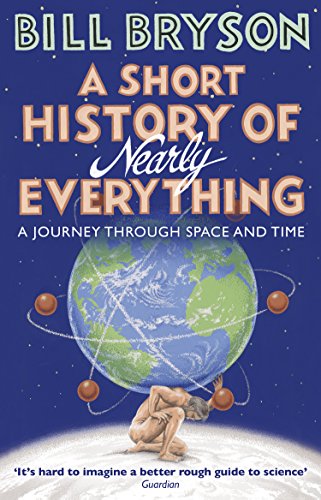
  1. A Short History of Nearly Everything. By Bill Bryson

Bryson condenses centuries of scientific knowledge about our cosmos into a 600 pager, imbuing it with his characteristic sense of curiosity and awe, all embellished with that humour we all know him for.  

  1. Vesper Flights. By Helen McDonald

A wide ranging selection of essays showcasing the wonder of all things wild. The writing is absolutely exquisite - this is nature writing at its best

  1. Under a White Sky: The Nature of the Future. By Elizabeth Kolbert

Kolbert follows up her The Sixth Extinction with this one, about people trying to heal the earth that is being destroyed by people. It’s not a pretty picture, there are no silver bullets and it is a scary read. But Kolbert is spellbinding, as usual.

  1. At Large and at Small: Familiar Essays. By Anne Fadiman

A superbly eclectic collection of intimate, clever essays written with that incredibly difficult-to-achieve lightness of touch. Informs and delights in equal measure.


Fiction:

  1. Writers and Lovers. By Lily King.

A coming-of-age tale of a late bloomer. There is sorrow and longing and passion and staying true to one’s self when all around you are taking the easy way out. A simple tale, lightly told.

  1. The Vanishing Act of Esme Lennox. By Maggie O’Farrell

O’Farrell has become one of my favourite novelists of all time. This one has her trademark Gothic intensity and is about deep family secrets and tragic early twentieth century asylum horror. A bittersweet read.

  1. Whereabouts. By Jhumpa Lahiri

A splendid little book about nothing and everything, Lahiri describes the rich inner monologue of a single, unmarried woman as she goes about her life in an Italian city. 

  1. Jorasanko. By Aruna Chakravarti

About the Tagore family and its women as they evolve from a generation of child brides in purdah to becoming social reformers, novelists, freedom fighters. A fascinating look at a way of life in an upper class Brahmin household during the Bengal Renaissance.

  1. Asoca: A Sutra. By Irwin Allan Sealy

A first person fictional narrative of one of India’s greatest kings. Sealy creates some finely etched characters as he sticks to the broad narrative arc we all know. It is an intimate portrait he paints, of a man and the times he lived in.


There were many more books and writers I could go on about - Francis Cha’s If I Had Your Face, Girish Karnad’s memoir This Life at Play, Brian Dillon’s fabulous Suppose a Sentence, Colin Thubron’s travelogue To A Mountain in Tibet, Maggie O’Farrel’s The Hand That First Held Mine… but then this would no longer be a listicle.


And so we move onto 2022. What do I hope for? More poetry, more classics, more books in translation. Today is the first day of the rest of the year. Let’s start.


Monday, July 05, 2021

The Wonder Of It All


 A Short History of Nearly Everything

By Bill Bryson


Centuries of scientific knowledge and discovery about our cosmos, condensed into a wonderful 600 page book that a complete layman can find interesting. That is Bryson's achievement. Some delightful factoids from the book:


  • For all we know, the North Star may have burned out at any time since the early fourteenth century - and news of it hasn't reached us as yet.
  • Every atom you possess has almost certainly passed through several stars and been part of millions of organisms on its way to becoming you. And so we will have atoms in our body that once belonged to Shakespeare, and the Buddha and Genghis Khan! A little bit of genius in each of us.
  • Rutherford, the 'father of nuclear physics' as we know him, was terrible at mathematics!! There is still hope for that kid who hates it.
  • Since atoms are mostly empty space, the solidity we experience around us is an illusion. So when you are sitting on a chair, you are not actually sitting, but levitating above it (albeit at a height of a hundred millionth of a centimeter).
  • There are two bodies of laws in physics - both leading quite separate lives. One for the world of the very small (quantum theory) and one for the universe at large (relativity).
  • We, us brilliant humans, really know very little! We live in a universe whose age we cannot calculate, surrounded by stars whose distance from us or each other we do not know, filled with 'dark' matter we can't identify, operating in conformance with physical laws we don't understand.
  • The study of plate tectonics tells us Kazhakstan was once attached to Norway and New England. Pick up a pebble in a Massachusetts beach and it is most closely related to ones in Africa. And sometime in the future, California will float off and become a Madagascar in the Pacific.
  • There are about a hundred million asteroids larger than 10 meters, at any point in time, in trajectories that cross earth's orbit. Earth is of course, trundling along at a brisk 100,000 kilometers an hour. These speeding bullets are impossible to track. Near misses happen two or three times a week and go unnoticed. Talk about living on borrowed time.
  • The distance from the surface of the earth to its middle is 6370 km. We have penetrated 3 kilometers at the most (searching for gold). So as Bryson says, if the planet were an apple, we wouldn't have even come close to breaking the skin!
  • All the glass on earth is flowing downwards under the relentless drag of gravity. So a pane of old glass from the window of a European cathedral is noticeably thicker at the bottom than the top.
  • The earth's magnetic field reverses itself every once in a while - the last reversal happened 750,000 years ago. And we have no idea why it happens!
  • The last supervolcano explosion happened in Sumatra 74000 years ago. That whopper was followed by 6 years of volcanic winter. It reduced global human population to no more than a few thousand (all of us are descended from those thousands - and so all that fighting over race and caste is quite insane, given the lack of our genetic diversity).
  • And Yellowstone National Park is an active supervolcano. It's cycle of eruptions is a massive one every 600,000 years. The last one was 630,000 years ago. Still want to visit?
  • The world belongs to the very small! If you totaled up all the biomass in the planet, microbes would account for at least 80% of all there is!
  • When you see lichen the size of a dinner plate, know that it is likely to be hundreds of years old! That is slow-growing!
  • The dust on your table or shelf is most likely old skin. You slough off several billion fragments of your dead skin every day.
  • When man arrived, North and South America lost about three quarters of their big animals. Australia lost 95%.
  • The second Baron Rothschild was a scientific collector of species - and a very deadly one. When he became interested in Hawaii, it lost 9 species of birds in a decade of his collecting!

The sense of curiosity and awe that Bryson imbues through everything he explains, the very things that are missing in all the science textbooks I have read, is what makes this book such a treasure. Add in his trademark humour and you have one of the most engaging pop science books ever!

And it has a lesson - that we, humans, are truly lucky to be here, at this time, in this planet, a tiny speck, both in terms of size and time, in this infinitely vast and unknowable universe. So as a poet once said, "Pay attention. Be astonished. Tell about it."


Saturday, March 20, 2021

Reading Art


Olivia Laing has been quite a favourite. Over the years, she has introduced you to new ways of seeing the world, through the eyes of artists and writers, and her own personal take on them. This one is more patchy than her normal work, perhaps because it is a collection of essays and pieces she has already published, a bit of a hodge-podge. It still inspires.


Laing writes about the value of art - about artists “who look with sharp eyes at the societies they inhabit but who also propose new ways of seeing.” She believes art can change things, by opening us to possibilities, while showing us the interior lives of others. She did that for me - managing to create that feeling of a window opening somewhere, into a world you haven’t really traveled to before. 


She leads you to artists who worked through rough times - when being gay was a crime, when Reagan-era government ignored the AIDS crisis, when borders closed and the world became insular. Literally, artists who created art in an emergency. Jean-Michel Basquiat, David Wagnarowicz, Derek Jarmen, all names I had to google. She has essays on Georgia O’Keefe and Hilary Mantel, painting and writing during times of personal crises. She writes love letters to David Bowie, Freddie Mercury. She writes about contemporary writers - Maggie Nelson, Deborah Levy, Chris Kraus, Sally Rooney; about women writers and alcohol (an echo to her own previous The Trip to Echo Spring); about Frank O’Hara and the New York school. She despairs about the state of the world - Brexit and Trump, walls and inhospitality. And it is always the art that is ‘reparative’ - planting a garden to stop a war. 


There are times when it can all be too much - too many artists you haven’t heard of, too many artworks you haven’t seen. But Laing writes as beautifully as ever. And as she brings one more unknown name into your consciousness, or when you are thrilled you have read someone she is writing about, you open yourself just that bit more to the ‘abundance of the cosmos’, to the ability to smell the flowers amongst the ruin. Laing does that to you. She is quite terrific that way.


Saturday, January 02, 2021

2020: My year in reading


It’s been quite a year! Shut in at home for the most part, I should have been devouring books. Instead, I found myself endlessly scrolling social feeds, Facebook and WhatsApp groups that had proliferated. The scrolling mostly had purpose – keeping me updated on the pandemic, feeding me kitchen hacks and recipes for a ‘help-less’ world, motivating me to work out, even providing some voyeuristic fun. Reading was somewhat of a casualty.
I did manage to finish 56 books, a book-a-week number that is my normal in most years. But I went through bouts of reading block that were quite upsetting – and a lot of the reading felt quite forced. It didn’t help that I felt Kindle had decided to up their e-book prices, causing me to question the value of buying every book I read.
And so, 56 it was, even if I felt it should have been so many more. Here are the ones I was truly engaged with - my best of. 
1. Svetlana Alexievich continues to enthral with her reporter-style writing. Her Last Witnesses: Unchildlike Stories narrates World War II in Belarus (which lost almost a quarter of its population to the war) through the eyes of people who were children during the war. War is horrifying in itself, but is especially terrible when children bear witness to it. A great read.
2. Kantor and Twohey’s She Said is another great piece of journalistic reportage. This one is about breaking the Weinstein sexual harassment story and igniting the Me-Too movement. It reads like a thriller – and the courage on display, of the journalists and the women who spoke up, is inspiring.
3. Joan Didion’s Slouching Towards Bethlehem is an old classic I just got to in 2020. ‘60s America comes alive in this set of essays where Didion’s writing is sharp, evocative and masterful.
4. Stephen Fry’s Mythos and Neil Gaiman’s Norse Mythology were totally entertaining reads – the old gods are so human and so much fun!
5. Lisa Brennan-Jobs memoir Small Fry was a captivating read on a complex man and a complex relationship. Steve Jobs does not emerge smelling of roses in this one.
6. My favourite discovery this year was Hope Jahren. Her Lab Girl is a memoir, describing what it takes to be a woman in science. But it is also an ode to plants – making us see a tree as a unique being. And her The Story of More builds a case for less consumption – as man’s excesses are slowly but surely endangering our world. A science writer with a love for language!
7. Maggie O’Farrell’s Hamnet was a truly touching fiction read. I loved her gorgeous prose imagining the origins of Shakespeare’s Hamlet, and describing the utter agony of grief.
8. Two delightful fiction reads were Guareschi’s The Little World of Don Camillo and Jane Borges’ Bombay Balchao. The former brings together a hot-headed Catholic priest, a Communist Mayor and a talking Christ on the Cross in a small Italian village in post-war Italy. The latter is a through-the-years exploration of a Goan community in South Mumbai. Both are funny and poignant with a great set of characters. Both were perfect for an anxiety-ridden time.
9. Two long reads, that took me some time to get through, yet were completely fulfilling were Maria Popova’s Figuring and Dalrymple’s Anarchy. Popova tells us of inspiring people – women and men who were geniuses in their own ways, who left an impact on the world. My personal favourites were Emily Dickinson and Rachel Carson. And Dalrymple made history come alive as he described a corporate takeover by the East India Company of some of the wealthiest kingdoms in the world.
There were other good reads. Ann Patchett and Alice Munro, Bill Bryson and Madeleine Miller, Elizabeth Strout and Tina Brown, Tove Jansson and Vivian Gornick. So in a very strange year, they were the ones I retreated to, for familiarity, comfort, refuge. They have rarely disappointed.

A Philosophy for Modern Life

  I read a book like this and I want to go back to school. The ideas, the people, the history! We often think of existentialism as something...