Thursday, February 24, 2022

Imagining Nations

 Midnight's Borders by Suchitra Vijayan


This is a hard-hitting book, one which raises more questions than it answers - what makes a country, does culture trump nationhood, how does one define empire, or freedom, and ultimately, do good fences make good neighbours, or do they just make unequal people?

Suchitra Vijayan, a journalist and a lawyer, travels 9000 miles along India's borders - through Afghanistan, Rajasthan, Punjab, Kashmir, West Bengal, Arunachal Pradesh, Nagaland, Assam.. documenting people and their stories at 'the frayed edges of the republic', counting the human toll of borders and the nation state. "Where you are born, what passport you hold, can shrink your world, cripple you and sometimes kill you," she says. Of course, most of the people in her stories have no conception of a thing called a passport. All they know is that Messrs. Durand, Radcliffe and McMahon drew lines on a map that changed their lives forever, dividing families, uprooting homes lived in for generations, disrupting ways of life unimaginably. 

The stories are hearbreaking, the ones from the eastern borders especially so, since these are stories being enacted now - in Assam and West Bengal, people who have lived in their homes for decades, whose families live across a line that exists only in maps, forced to prove their citizenship with documents they do not have, their futures dependent on arbitrary rulings by courts and lawyers they cannot afford. "They all look the same, speak the same," says a BSF guard in the Bangladesh-India border, "..that is why we need to keep a close watch." Vijayan calls this "the perfect distillation of Indian nationalism, a foundational myth about the nation's beginning and who belongs within its boundaries and who doesn't."

The partition vignettes from Punjab are less startling, mostly because the tragedy happened more than seven decades ago. Yet even here, Vijayan makes us realize that while we might know the history, and we have all read Train to Pakistan and watched Tamas, there still remain thousands of stories to be told - harrowing, soul-destroying, tragic.

Kashmir and Nagaland are different. For the first time in the book, we encounter people who do not want in, who believe they are not part of our country. Vijayan writes of a memorial outside Kohima dedicated to Khrisanisa Seyie, the first president of the Federal Government of Nagaland (!), with a plaque that says, "Nagas are not Indians; their territory is not part of the Indian union. We shall uphold and defend this unique truth at all costs and always.". The counter-insurgency operations impacted thousands of Naga families, and have left graves across the state, some of which have stark messages for us - a gravestone in a remote border with Burma reads "India killed my son." The Nagaland chapter is terribly disconcerting - it is a chapter in Indian history we have never learnt, and this, along with the Kashmir one are the ones that make us wonder the most about the Indian state - what makes us less of an empire than China or Russia?

Vijayan writes with passion and deep empathy. She is transparent about where her sympathies lie and is scathing about Modi and the Hindutva agenda that seeks to discriminate against a particular religion with state instruments like the NRC and CAA. But this book is not a political rant. It serves as witness to the large human cost of manmade borders and the narrative of the nation state. It is an important book, a complex one, one that as Indians, we need to read, if we want our nation state to mean anything more than lines on a map guarded by an armed force.

Saturday, January 01, 2022

2021: My year in reading


There were so many good reads this year, it’s tough to pick favourites. Let me start by pointing out the missing parts. Not much of poetry in a year that deserved poetry, more than any other form, I think. Vijay Nambisan’s darkly humorous collection First Infinities was the only one I read. Not much of Indian writing in translation either - something I had sworn I would do more of. Qurattulain Hyder’s excellent Fireflies in the Mist was again the only one.

On the other hand, I discovered two delightful English writers I had never heard of before. Barbara Pym in her Excellent Women was wry and enchanting, and so was Elizabeth Taylor (no, not the actress) in Mrs Palfrey at the Claremont. I also managed to finish a big, big Russian book (on my journey to read big, big Russian books) - And Quiet Flows the Don. As usual, anything Russia intrigues me. 

And so onto picking my favourites for the year, out of the 54 I read, in no particular order.

Non-fiction:

  1. Languages of Truth: Essays (2003-2020). By Salman Rushdie

Very erudite, very opinionated, Rushdie is as usual, fabulous, making even the novels of Samuel Beckett sound interesting.

  1. Priestdaddy. By Patricia Lockwood

I love memoirs, and this one is truly a great one about growing up Catholic with a priest for a father!! Lockwood’s brilliant writing was a revelation, and she can make even the most horrific scenes laugh-out-loud funny. 

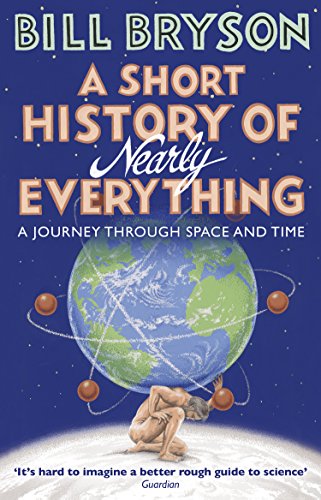
  1. A Short History of Nearly Everything. By Bill Bryson

Bryson condenses centuries of scientific knowledge about our cosmos into a 600 pager, imbuing it with his characteristic sense of curiosity and awe, all embellished with that humour we all know him for.  

  1. Vesper Flights. By Helen McDonald

A wide ranging selection of essays showcasing the wonder of all things wild. The writing is absolutely exquisite - this is nature writing at its best

  1. Under a White Sky: The Nature of the Future. By Elizabeth Kolbert

Kolbert follows up her The Sixth Extinction with this one, about people trying to heal the earth that is being destroyed by people. It’s not a pretty picture, there are no silver bullets and it is a scary read. But Kolbert is spellbinding, as usual.

  1. At Large and at Small: Familiar Essays. By Anne Fadiman

A superbly eclectic collection of intimate, clever essays written with that incredibly difficult-to-achieve lightness of touch. Informs and delights in equal measure.


Fiction:

  1. Writers and Lovers. By Lily King.

A coming-of-age tale of a late bloomer. There is sorrow and longing and passion and staying true to one’s self when all around you are taking the easy way out. A simple tale, lightly told.

  1. The Vanishing Act of Esme Lennox. By Maggie O’Farrell

O’Farrell has become one of my favourite novelists of all time. This one has her trademark Gothic intensity and is about deep family secrets and tragic early twentieth century asylum horror. A bittersweet read.

  1. Whereabouts. By Jhumpa Lahiri

A splendid little book about nothing and everything, Lahiri describes the rich inner monologue of a single, unmarried woman as she goes about her life in an Italian city. 

  1. Jorasanko. By Aruna Chakravarti

About the Tagore family and its women as they evolve from a generation of child brides in purdah to becoming social reformers, novelists, freedom fighters. A fascinating look at a way of life in an upper class Brahmin household during the Bengal Renaissance.

  1. Asoca: A Sutra. By Irwin Allan Sealy

A first person fictional narrative of one of India’s greatest kings. Sealy creates some finely etched characters as he sticks to the broad narrative arc we all know. It is an intimate portrait he paints, of a man and the times he lived in.


There were many more books and writers I could go on about - Francis Cha’s If I Had Your Face, Girish Karnad’s memoir This Life at Play, Brian Dillon’s fabulous Suppose a Sentence, Colin Thubron’s travelogue To A Mountain in Tibet, Maggie O’Farrel’s The Hand That First Held Mine… but then this would no longer be a listicle.


And so we move onto 2022. What do I hope for? More poetry, more classics, more books in translation. Today is the first day of the rest of the year. Let’s start.


Monday, July 05, 2021

The Wonder Of It All


 A Short History of Nearly Everything

By Bill Bryson


Centuries of scientific knowledge and discovery about our cosmos, condensed into a wonderful 600 page book that a complete layman can find interesting. That is Bryson's achievement. Some delightful factoids from the book:


  • For all we know, the North Star may have burned out at any time since the early fourteenth century - and news of it hasn't reached us as yet.
  • Every atom you possess has almost certainly passed through several stars and been part of millions of organisms on its way to becoming you. And so we will have atoms in our body that once belonged to Shakespeare, and the Buddha and Genghis Khan! A little bit of genius in each of us.
  • Rutherford, the 'father of nuclear physics' as we know him, was terrible at mathematics!! There is still hope for that kid who hates it.
  • Since atoms are mostly empty space, the solidity we experience around us is an illusion. So when you are sitting on a chair, you are not actually sitting, but levitating above it (albeit at a height of a hundred millionth of a centimeter).
  • There are two bodies of laws in physics - both leading quite separate lives. One for the world of the very small (quantum theory) and one for the universe at large (relativity).
  • We, us brilliant humans, really know very little! We live in a universe whose age we cannot calculate, surrounded by stars whose distance from us or each other we do not know, filled with 'dark' matter we can't identify, operating in conformance with physical laws we don't understand.
  • The study of plate tectonics tells us Kazhakstan was once attached to Norway and New England. Pick up a pebble in a Massachusetts beach and it is most closely related to ones in Africa. And sometime in the future, California will float off and become a Madagascar in the Pacific.
  • There are about a hundred million asteroids larger than 10 meters, at any point in time, in trajectories that cross earth's orbit. Earth is of course, trundling along at a brisk 100,000 kilometers an hour. These speeding bullets are impossible to track. Near misses happen two or three times a week and go unnoticed. Talk about living on borrowed time.
  • The distance from the surface of the earth to its middle is 6370 km. We have penetrated 3 kilometers at the most (searching for gold). So as Bryson says, if the planet were an apple, we wouldn't have even come close to breaking the skin!
  • All the glass on earth is flowing downwards under the relentless drag of gravity. So a pane of old glass from the window of a European cathedral is noticeably thicker at the bottom than the top.
  • The earth's magnetic field reverses itself every once in a while - the last reversal happened 750,000 years ago. And we have no idea why it happens!
  • The last supervolcano explosion happened in Sumatra 74000 years ago. That whopper was followed by 6 years of volcanic winter. It reduced global human population to no more than a few thousand (all of us are descended from those thousands - and so all that fighting over race and caste is quite insane, given the lack of our genetic diversity).
  • And Yellowstone National Park is an active supervolcano. It's cycle of eruptions is a massive one every 600,000 years. The last one was 630,000 years ago. Still want to visit?
  • The world belongs to the very small! If you totaled up all the biomass in the planet, microbes would account for at least 80% of all there is!
  • When you see lichen the size of a dinner plate, know that it is likely to be hundreds of years old! That is slow-growing!
  • The dust on your table or shelf is most likely old skin. You slough off several billion fragments of your dead skin every day.
  • When man arrived, North and South America lost about three quarters of their big animals. Australia lost 95%.
  • The second Baron Rothschild was a scientific collector of species - and a very deadly one. When he became interested in Hawaii, it lost 9 species of birds in a decade of his collecting!

The sense of curiosity and awe that Bryson imbues through everything he explains, the very things that are missing in all the science textbooks I have read, is what makes this book such a treasure. Add in his trademark humour and you have one of the most engaging pop science books ever!

And it has a lesson - that we, humans, are truly lucky to be here, at this time, in this planet, a tiny speck, both in terms of size and time, in this infinitely vast and unknowable universe. So as a poet once said, "Pay attention. Be astonished. Tell about it."


Saturday, March 20, 2021

Reading Art


Olivia Laing has been quite a favourite. Over the years, she has introduced you to new ways of seeing the world, through the eyes of artists and writers, and her own personal take on them. This one is more patchy than her normal work, perhaps because it is a collection of essays and pieces she has already published, a bit of a hodge-podge. It still inspires.


Laing writes about the value of art - about artists “who look with sharp eyes at the societies they inhabit but who also propose new ways of seeing.” She believes art can change things, by opening us to possibilities, while showing us the interior lives of others. She did that for me - managing to create that feeling of a window opening somewhere, into a world you haven’t really traveled to before. 


She leads you to artists who worked through rough times - when being gay was a crime, when Reagan-era government ignored the AIDS crisis, when borders closed and the world became insular. Literally, artists who created art in an emergency. Jean-Michel Basquiat, David Wagnarowicz, Derek Jarmen, all names I had to google. She has essays on Georgia O’Keefe and Hilary Mantel, painting and writing during times of personal crises. She writes love letters to David Bowie, Freddie Mercury. She writes about contemporary writers - Maggie Nelson, Deborah Levy, Chris Kraus, Sally Rooney; about women writers and alcohol (an echo to her own previous The Trip to Echo Spring); about Frank O’Hara and the New York school. She despairs about the state of the world - Brexit and Trump, walls and inhospitality. And it is always the art that is ‘reparative’ - planting a garden to stop a war. 


There are times when it can all be too much - too many artists you haven’t heard of, too many artworks you haven’t seen. But Laing writes as beautifully as ever. And as she brings one more unknown name into your consciousness, or when you are thrilled you have read someone she is writing about, you open yourself just that bit more to the ‘abundance of the cosmos’, to the ability to smell the flowers amongst the ruin. Laing does that to you. She is quite terrific that way.


Saturday, January 02, 2021

2020: My year in reading


It’s been quite a year! Shut in at home for the most part, I should have been devouring books. Instead, I found myself endlessly scrolling social feeds, Facebook and WhatsApp groups that had proliferated. The scrolling mostly had purpose – keeping me updated on the pandemic, feeding me kitchen hacks and recipes for a ‘help-less’ world, motivating me to work out, even providing some voyeuristic fun. Reading was somewhat of a casualty.
I did manage to finish 56 books, a book-a-week number that is my normal in most years. But I went through bouts of reading block that were quite upsetting – and a lot of the reading felt quite forced. It didn’t help that I felt Kindle had decided to up their e-book prices, causing me to question the value of buying every book I read.
And so, 56 it was, even if I felt it should have been so many more. Here are the ones I was truly engaged with - my best of. 
1. Svetlana Alexievich continues to enthral with her reporter-style writing. Her Last Witnesses: Unchildlike Stories narrates World War II in Belarus (which lost almost a quarter of its population to the war) through the eyes of people who were children during the war. War is horrifying in itself, but is especially terrible when children bear witness to it. A great read.
2. Kantor and Twohey’s She Said is another great piece of journalistic reportage. This one is about breaking the Weinstein sexual harassment story and igniting the Me-Too movement. It reads like a thriller – and the courage on display, of the journalists and the women who spoke up, is inspiring.
3. Joan Didion’s Slouching Towards Bethlehem is an old classic I just got to in 2020. ‘60s America comes alive in this set of essays where Didion’s writing is sharp, evocative and masterful.
4. Stephen Fry’s Mythos and Neil Gaiman’s Norse Mythology were totally entertaining reads – the old gods are so human and so much fun!
5. Lisa Brennan-Jobs memoir Small Fry was a captivating read on a complex man and a complex relationship. Steve Jobs does not emerge smelling of roses in this one.
6. My favourite discovery this year was Hope Jahren. Her Lab Girl is a memoir, describing what it takes to be a woman in science. But it is also an ode to plants – making us see a tree as a unique being. And her The Story of More builds a case for less consumption – as man’s excesses are slowly but surely endangering our world. A science writer with a love for language!
7. Maggie O’Farrell’s Hamnet was a truly touching fiction read. I loved her gorgeous prose imagining the origins of Shakespeare’s Hamlet, and describing the utter agony of grief.
8. Two delightful fiction reads were Guareschi’s The Little World of Don Camillo and Jane Borges’ Bombay Balchao. The former brings together a hot-headed Catholic priest, a Communist Mayor and a talking Christ on the Cross in a small Italian village in post-war Italy. The latter is a through-the-years exploration of a Goan community in South Mumbai. Both are funny and poignant with a great set of characters. Both were perfect for an anxiety-ridden time.
9. Two long reads, that took me some time to get through, yet were completely fulfilling were Maria Popova’s Figuring and Dalrymple’s Anarchy. Popova tells us of inspiring people – women and men who were geniuses in their own ways, who left an impact on the world. My personal favourites were Emily Dickinson and Rachel Carson. And Dalrymple made history come alive as he described a corporate takeover by the East India Company of some of the wealthiest kingdoms in the world.
There were other good reads. Ann Patchett and Alice Munro, Bill Bryson and Madeleine Miller, Elizabeth Strout and Tina Brown, Tove Jansson and Vivian Gornick. So in a very strange year, they were the ones I retreated to, for familiarity, comfort, refuge. They have rarely disappointed.

Thursday, June 25, 2020

The Faraway Beckoning

Your reaction to a book is influenced by a number of things, chief among which has to be the time when you read it. Imagine you are in lockdown and haven’t stepped out of home for close to a hundred days. And you decide to read a book about a place as far away from home as

you can get. 


Barry Lopez’s descriptions of that wild distant place called the Arctic have a strangely calming effect on you - anxiety levels drop as you imagine the endurance needed for a tree to survive, or an animal, or a human being, in that most inhospitable world. “...the most salient, overall adaptive strategy of arctic organisms is their ability to enter a frozen state or a state of very low metabolic activity whenever temperatures drop, and then to resume full metabolic activity whenever it warms sufficiently.” It’s a lesson we can all learn, perhaps.


The world he describes is wondrous - where the concept of the sun rising in the east and setting in the west doesn’t apply; neither does the convention of a morning, noon, afternoon, and evening. It’s a world that strangely receives the same amount of sunlight as the tropics, but it comes all at once, and at a low angle, so without vigour. As much moisture falls here as in the Mojave desert, and it is available as liquid water, the only form plants can use it, only in summer.


The organisms that make a life here are far fewer in number - but they do exist.The muskox and the caribou, the polar bear and the narwhals. Lopez writes about them in detail, describing their coping mechanisms in an environment where survival can be so very hard. And then there are the people, the Eskimos (or the Inuit or Yupik, as we call them today) who have an instinctive understanding of the harsh, beautiful land and its creatures, borne out of centuries of interaction and reflection and observation. Lopez calls them the ‘hunting people’ and  takes pains to describe this understanding and contrasts it with Western civilization’s relationship with nature. This understanding he says is a ‘state of mind’; one that means you ‘have the land around you like clothing’, that you ‘release yourself from rational images of what something “means” and to be concerned only that it “is”.’ It is a very different take from how we traditionally look at the natural world. Lopez writes, “ Eskimos, who sometimes see themselves as still not quite separate from the animal world, regard us as a kind of people whose separation may have become too complete. They call us, with a mixture of incredulity and apprehension, “the people who change nature.”


Lopez also writes extensively about man’s quest to discover and own these harsh lands - that primordial quest for fame and fortune that led the western man to risk life and limb in journeys into the unknown, journeys that are quite unimaginable to us in modern times. The harshness of the environment has very little parallel - “No summer is long enough to take away the winter. The winter always comes,” he says. And even in late summer, he says, “Eventually the cold, damp air finds its way through insulated boots and wool clothing to your bones.” The will needed to get there and survive had to be quite extraordinary.


But ultimately, it is Lopez’s descriptions of the beauty of that extreme north, that made the book for me. To quote just one instance: “After dinner I went down by the water to wash my hair and to sit. Two silver-gray caribou were gazing at the far end of the river. It was so warm I was barefoot. In the hills beyond were the black dots of muskoxen and white dots of browsing arctic hare. The sound of the river was in my head, and its cold drops ran down my chest. A Chipewyan guide named Saltatha once asked a French priest what lay beyond the present life. “You have told me heaven is very beautiful,” he said. “ Now tell me one more thing. Is it more beautiful than the country of the muskoxen in the summer, when sometimes the mist blows over lakes, and sometimes the water is blue, and the loons cry very often? That is beautiful. If heaven is still more beautiful, I will be glad. I will be content to rest there until I am very old.”


At its heart, this book is an elegy, for a world that is most likely lost to us. Where modern technology has made redundant the knowledge of the land and its inhabitants that comes from living off it, using what is available in the harshness. This loss affects our relationship with our environments in a very fundamental way. It makes us look at our landscapes and the animals within as things to ‘use’ today without understanding the larger picture. And because today’s science allows man to, as Lopez says, ‘circumvent evolutionary law, it is incumbent upon him... to develop another law to abide by if he wishes to survive, to not outstrip his food base. He must learn restraint. He must derive some other, wiser way of behaving toward the land. He must be more attentive to the biological imperatives of the system of sun-driven protoplasm upon which he, too, is still dependent….” Lopez wrote these wise words in the 1980s. How much more relevant they are today!


Monday, December 30, 2019

2019: My Year in Reading


Goodreads tells me I have read a total of 18,309 pages across 58 books in 2019. Numbers do not tell the whole story, though. There have been years when I have read more, yet less satisfactorily. This year has been a relatively good year in reading, with a good mix of fiction and non-fiction, a number of new writers I will definitely explore further, and a couple of spectacular works I will treasure for a lifetime. So without much ado, here are my top reads of the year, in no particular order:
  1. Kathleen Jamie’s Sightlines: I adore Jamie’s writing. This one has her doing her trademark lyricism on Scotland, its landscapes and seascapes. The essays are poetry in prose form.
  2. Svetlana Alexievich’s Chernobyl Prayer: A Chronicle of the Future. The disaster from the trenches. Horrifying beyond belief.
  3. Elizabeth Kolbert’s Sixth Extinction: An Unnatural History. We are in a mass extinction period in the earth’s history and Kolbert tells us why and how, in her irony-laced low-key style. Doomsday it is, for sure.
  4. Tara Westover’s Educated. Grit, fortitude, courage. A memoir of incredible power.
  5. Helen DeWitt’s The Last Samurai. My favourite fiction read of the year. Incredibly geeky, totally original.
  6. Baburao Bagul’s When I Hid My Caste: Stories. Stories of caste inequity and life in the margins. Stories that need to be told over and over.
  7. Nora Ephron’s I Feel Bad About My Neck: And Other Thoughts On Being A Woman. Ephron’s smart writing tackling women and ageing strikes close to the bone.
  8. A A Gill’s Lines in the Sand: Collected Journalism. A great introduction to AA Gill and his wit, empathy, wisdom.
  9. Siddhartha Mukherjee’s The Emperor of All Maladies: A Biography of Cancer. A long, compelling, scary read
There were more notables: Scott Fitzgerald’s The Crack-Up, his Esquire essays on addiction that seem so ahead of its time; Tina Brown’s Vanity Fair Diaries, a romp through ‘80s New York publishing, perfect reading for a celebrity junkie like me; Madeline Miller’s Circe, great characterization and a riveting retelling of a Greek myth; Pomerantsev’s Nothing is True and Everything is Possible, tales from surreal modern day Russia; Anthony Marra’s A Constellation of Vital Phenomena, a touching tale set in Chechnya that made me tear up in parts; Alain de Botton’s How Proust Can Change Your Life, bite-sized pieces of Proust, a man I will never read in my lifetime; Bakewell’s How to Live, again, digestible pieces of Montaigne, another man I will never read.

There were disappointments too - Ted Chiang’s science fiction (I should never attempt this genre), Ghosh’s Gun Island (even Ghosh can go wrong!), Ian McEwan Machines Like Me, Stella Gibson’s Cold Comfort Farm, Michael Dirda’s Book by Book.

But the good ones more than made up for it.

So, goodbye 2019. Thank you for the words. They made my year.

A Philosophy for Modern Life

  I read a book like this and I want to go back to school. The ideas, the people, the history! We often think of existentialism as something...